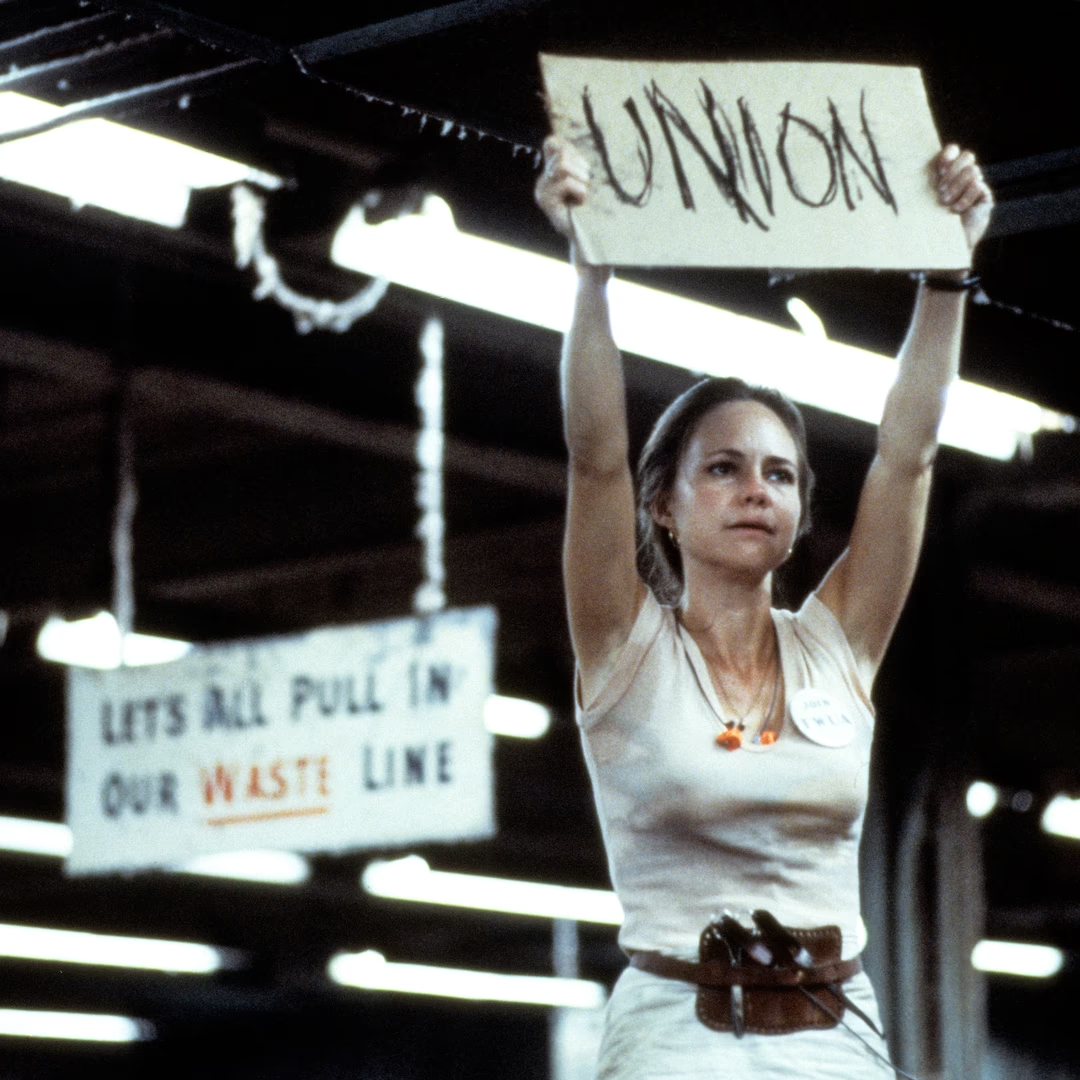

Sally’s performance not only earned her the recognition she deserved, but it also likely influenced later strong performances by actresses like Julia Roberts in Erin Brockovich and Meryl Streep in Silkwood.
However, as was previously mentioned, her well-known job came at a high price.
Before Norma Rae, Sally Field was still trying to shed her early TV personas as Gidget and The Flying Nun. Hollywood didn’t take her seriously, so she felt the need to prove herself. Although she realized it wouldn’t be easy, she saw the role of Norma Rae Webster as a chance to completely revamp her career.
The fact that Sally’s ex-boyfriend, well-known actor Burt Reynolds, was jealous and unsupportive was one of the primary problems.
Reynolds ridiculed Field when she attempted to explain that it was just a role she was performing, joking, “Oh, so now you’re an actor… You’re allowing your ambition to overcome you. Reynolds famously warned Field, “No lady of mine is gonna play a whore,” expressing disapproval of her portrayal of Norma Rae.
When Sally initially saw the film, she recalled being terrified and sitting next to her mother in a small screening room at Fox Studios.
She stated, “What raced through my mind was the fear that I wasn’t sufficient to hold an audience for two hours.”
recommended on the last day of manufacturing
Their famous affair began when Reynolds asked Sally to star in Smoky and the Bandit. At initially, they had a strong and instant connection, but Sally soon found it to be a nightmare.
After informing her “what was allowed and what was not,” the movie star quickly began to “housebreak” her and transform her into a “shadowy version of herself,” according to her. The most recent instance of Burt’s criticism of Sally was his displeasure of her performance in Norma Rae.
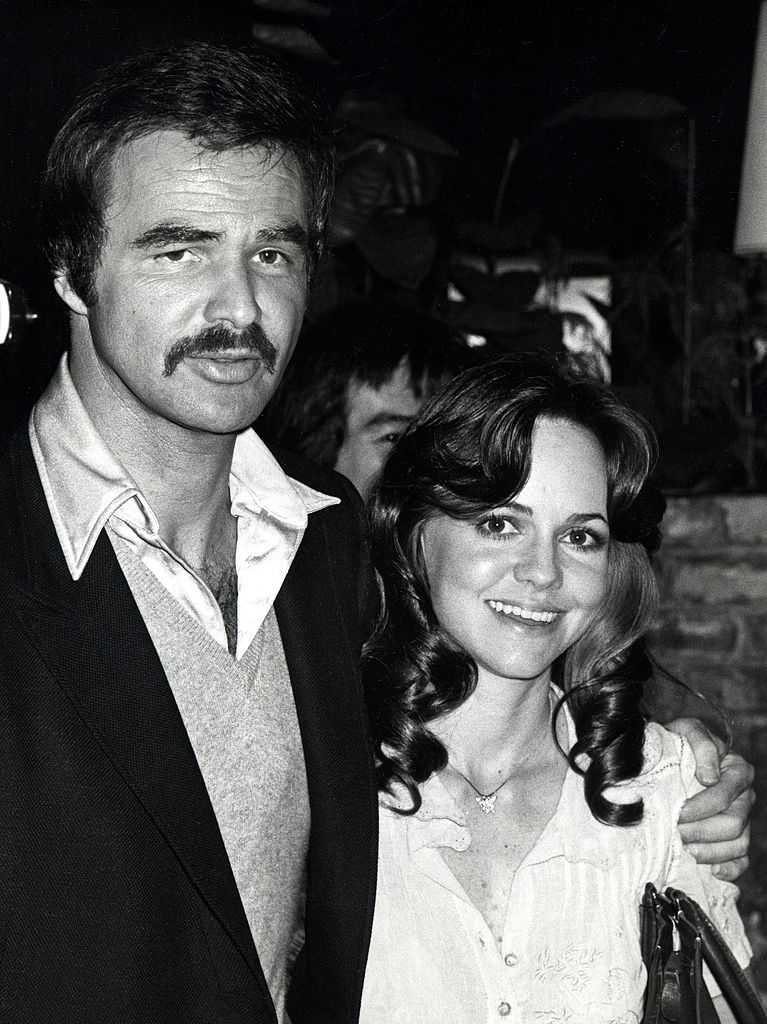
Field protested but agreed to the assignment. On the final day of production, Reynolds showed up on set and proposed with a diamond ring. Field recalls that she turned down his offer since it didn’t feel like “me.” Other than saying “thank you,” she didn’t say anything following the unsettling encounter.
After Norma Rae concluded, Field began to feel more confident and independent; it was almost as if her own life and the play were at odds. Field noticed that Reynolds did not enjoy the way her personality was starting to “flare out.”
He responded with “shocked disapproval.”
worked in the mill every day for two weeks.
Many may recall that the real story of Crystal Lee Sutton, a textile worker from Roanoke Rapids, North Carolina, who fought for a workers’ union at a J.P. Mill of Stevens Textiles, served as the basis for Norma Rae.
During a brief visit to New York from the Hooper set, Field, who had already been passed over by several actresses, tried out for the role. (According to her memoir, Shirley MacLaine had initially expressed interest in the role.)
To be fully prepared for her play, Sally Field immersed herself in the lives of Southern mill workers. She and Beau Bridges spent some time working in a factory to perform in-depth research, according to IMDb. Field immersed himself in the environment, adopting the traits of the workers, understanding their struggles, and experiencing the physical and emotional exhaustion they went through.
Although I didn’t have an 8-hour shift or work there all day, I worked at the mill every day for two weeks since I felt like it. You get seasick and the whole weaving room trembles because the vibration is like a ship moving. Two hours there felt like eight hours anywhere, I can assure you. As a result, you need to become used to it and get sea legs. All of the actors and staff were commenting, “I don’t know how they do it,” Sally Field remarked.
Norma Rae was shot where?
While the actual story of Crystal Lee Sutton was set in Roanoke Rapids, North Carolina, Norma Rae was filmed in Opelika, Alabama.
Filming started in May 1978, using locals as industrial workers for the shots. The film’s textile factory was transformed from the Opelika Manufacturing Corp., and the motel scenes were shot at the Golden Cherry Motel, which has been there since the 1940s.
Although the town’s first textile mill since 1900, Opelika, closed its doors in 2004, it wasn’t until 2016 that it was demolished. The constant hum of the mill made it difficult to record the actors’ lines on camera, which was one difficult part of the filming process.
A significant event
Hollywood’s visit to the small Alabaman town of Opelika was a significant occasion. During the filming, Field visited with the then-Gov. George Wallace, while many locals eagerly awaited the possibility that megastar Burt Reynolds might visit the site to see his fiancée. The excitement in the air was palpable.
The primary character, Sally Field, had the greatest influence on the local populace, despite Burt visiting some of the filming locations.
She is a “beautiful lady,” according to Warner Williams, who worked with the Opelika Chamber of Commerce when Norma Rae was filmed. “The days before filming, she hung around the mill and got ready for her role by dressing in old, tattered clothes.”
The real name of Norma Rae is Crystal Lee Sutton.
Crystal Lee Sutton was born on December 31, 1940.
She remembers that the community of Roanoke Rapids, where she grew up, was divided between managers and workers.
Throughout my youth, I heard disparaging remarks about textile workers. The doctors, lawyers, and managers didn’t want their children to be around us. They usually wore new clothes and were the smartest. Crystal told the Washington Post in 1980, “They were the cheerleaders and the majorettes.” Anything extraordinary was the product of your upper class.
Crystal Lee started working when she was sixteen years old. By the time she was seventeen, she was working the midnight shift at a textile industry and was taking the 4 p.m. shift to recharge her batteries. At 19, she gave birth to her first child, and by the time she was 20, she had lost her spouse in a tragic accident.
Her third child was born in 1965, and her second at age 21.
Known for her courageous actions as a union organizer, Crystal Lee Sutton made headlines in 1973 when she was fired from the J.P. Stevens planted in Roanoke Rapids, North Carolina, for her pro-union activities.
At the time, Sutton, a 33-year-old mother of three, was earning $2.65 per hour folding towels. The 1979 movie, which drew inspiration from New York Times reporter Henry “Hank” Leifermann’s 1975 book Crystal Lee: A Woman of Inheritance, honored her fight for workers’ rights.
Director Martin Ritt famously said of Crystal Lee Sutton, “I’ve known a lot of women in my life, most of them much more educated and sophisticated, who would not have had the balls that she had.”
Crystal Lee Sutton’s frank evaluation of the movie
The finished film did not satisfy Crystal Lee Sutton, the creator of the Norma Rae story.
She reasoned that it should have been a docu-drama. “It made me laugh and cry in parts,” Sutton said, acknowledging that he thought the film was humorous. “I just thought if they’re going to spend millions of dollars making a movie, I wanted it to be a good educational union movie, not a soap-opera love story like you can see every day on TV.”
Sally Field too broke down in tears after watching the movie. She said that she was moved to tears by the audience’s amazing response during the Cannes Film Festival’s Norma Rae premiere.
filed a lawsuit against the film’s makers.
At the box office, Norma Rae earned $12.5 million, but Sutton received nothing.
The same was true of the novel Crystal Lee; it didn’t provide her anything.
Crystal Lee Sutton had to fight 20th Century-Fox after the movie’s popularity in order to win a tiny settlement, ultimately receiving $52,000, of which half went to taxes. Crystal utilized the money she had left over after paying off some of her loans to purchase a used Pontiac Trans-Am for her third spouse. She told the Washington Post, “He deserved something because he helped and supported me through all of this.”

Her husband, Preston Sutton, expressed his admiration for her courage:
“I told my wife that I don’t care if we have to live in a car because I’m proud of what she did and what she stood for,” said Preston Sutton. “You’d better think that a lot of people would want to have the guts to follow in her footsteps.”
There was only one interaction between Sally Field and Crystal Lee Sutton.
A highlight of Crystal Lee Sutton’s life was meeting Sally Field, who played her in Norma Rae, in California in 1980. The meeting between the actress and the real-life inspiration to promote the film was a lovely moment.
Sutton recalled meeting Field at a reception, and cameras flashed as they posed together, hands up in a triumphant moment.
“We talked about children,” Sutton said. She suggested that if she was ever able to assist, I should let her know.
On September 11, 2009, Crystal Lee Sutton, the real-life creator of the Oscar-winning movie Norma Rae, passed away at the age of 68. She died of inoperable brain cancer at the Hospice Home in Burlington, North Carolina.
Dolly Parton’s connection
In Norma Rae, Sally Field’s character listens to the radio and sings along to the Dolly Parton song “It’s All Wrong, But It’s Alright.”
A enduring connection between the two icons would be formed ten years later when Field and Parton costarred in the popular film Steel Magnolias.
The truth about the UNION sign incident
A Crystal incident The famous scene in Norma Rae where Lee Sutton writes “UNION” on a piece of cardboard and waits on a table until her coworkers turn off their laptops was largely inspired by her life.
This dramatic moment, which has since become one of the most famous in American film history, was Sutton’s pivotal act of disobedience in 1978.
The film’s Norma Rae is called into the management office and fired after attempting to copy a racist letter.
She refuses to leave, so she stands on a table in the weaving room, writes “UNION” on cardboard and displaying it for everyone to see. This brave act is still recognized as one of the most powerful and important sequences in film history.
“I took a piece of cardboard, wrote the word UNION in large letters on it, got up on my work table, and slowly turned it around,” Crystal Lee Sutton herself said of the actual incident. The workers started shutting down their machines as they gave me the victory sign. All of a sudden, the place was quite silent.
The film The authenticity of the poster
There is one element of the movie poster that has annoyed certain individuals.
Instead of the usual image of a determined Norma Rae wearing her work attire and brandishing the union emblem, the poster shows a smiling, more professional Sally Field simply raising her hands in the air. It appears odd, as if the removal of the union sign was intentional.
There is an explanation for this shift of focus. Martin Ritt, the film’s director, has admitted that he “couldn’t have cared less about labor unions” and that telling the individual’s tale was his main priority.

In a way, the film Rocky also had an impact on Norma Rae’s marketing.
Tamara Asseyev and Alex Rose, co-producers of Norma Rae, stated in an interview that Rocky demonstrated to them the box office potential of a tale about “a small person who succeeded.” They were able to sell the concept to 20th Century-Fox and Alan Ladd Jr. after several other studios rejected it.
The path out of acute cuteness: broken ribs
Sally Field, who had long been known for her endearing and comical roles, had become tired of portraying the “cute” flying nun.
She said, “I was so sick of being boring, but I really didn’t have the courage to make any difficult decisions for a long time.”
Norma Rae was therefore more than just a breakthrough; it was a turning point.
Sally Field gave the role her all; in fact, during a scene in which she was struggling to avoid being shoved into a police cruiser, she shattered one of the actor’s ribs.
Do you not believe that you will win anything?
Sally Field, on the other hand, was both shocked and overjoyed to win the Academy Award for Best Actress. Hollywood had finally acknowledged her talent, but the road had not been smooth.
As we now know, Field chose to go on with the film in spite of Burt Reynolds’ counsel, which ultimately led to the breakdown of their partnership.
We also know that Reynolds, who received a Best Actress nomination, chose not to accompany Field to the ceremony. When Field told him she was attending the Cannes Film Festival, he inquired angrily, “What the hell I intended to do there?”Before hanging up, he said, “You don’t expect to win anything, do you?” and dismissed it as a “waste of time.”
Fortunately, fellow actor David Steinberg and his wife, Judy, saved her when Reynolds refused to go to the Academy Awards with her.
According to Field, David answered, “Well, for heaven’s sakes, we’ll take you.” With Judy, he planned an extravagant celebration. When they picked me up, the limousine was filled with champagne. They made it pretty fun.
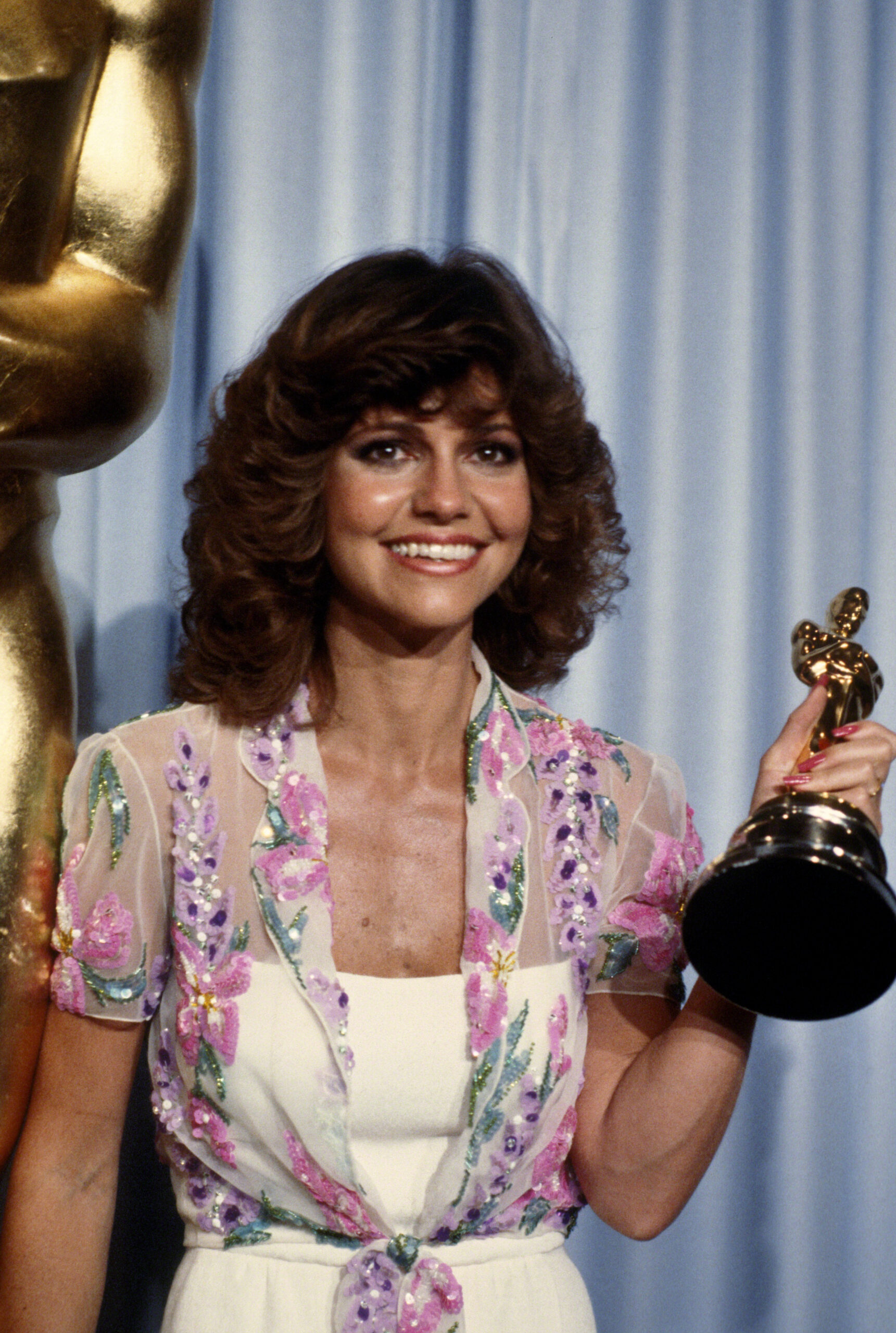
Over forty years later, Sally Field’s performance in Norma Rae remains one of the most powerful films for workers’ rights.
But behind the triumph was a woman who gave her all to bring one of the most important characters in movies to life. The truth? Like Norma Rae herself, success was something that had to be won rather than something that just happened.