Some photos have the ability to chill you even if they weren’t intended to. If a picture is taken out of context or viewed through the lens of history, it can become frightening. Why does it look so unsettling? What is the backstory on this?
Throughout history, cameras have captured moments that provoke interest, fear, and a host of other worries. Despite not being meant to be disturbing, these eerie images make an impression because of their unique traits or secret origins.
Sometimes knowing the truth about them makes things less stressful, but other times it only makes things more mysterious. Are you ready to discover the story behind these eerie historical snippets?
Bison skull mountain (1892).

Photographed in 1892 at the Michigan Carbon Works in Rougeville, Michigan, this unsettling image captures a terrible historical moment. It shows a huge pile of bison skulls being turned into charcoal, fertilizer, and bone glue. This image is concerning because it tells the story of a significant loss brought about by industrialization and colonialism, in addition to the exploitation of natural resources.
At the start of the nineteenth century, there were between 30 and 60 million bison in North America. The number of wild bison had fallen to a startling 456 by the time this picture was taken. The once-thriving herds were decimated by a brutal massacre brought on by the westward expansion of settlements and the market demand for bison bones and skins. Between 1850 and the late 1870s, the majority of herds experienced decimation, which seriously harmed the environment and culture.
More than just a representation of industrial greed, the mounting pile of bones in this image also represents the close relationship that Indigenous Nations have with bison, which has been shattered by this widespread tragedy. The pile of bones, which resembles a man-made mountain, makes it difficult to distinguish between natural and artificial landscapes, resulting in what photographer Edward Burtynsky later called “manufactured landscapes.”
Thanks to conservation initiatives, there are currently about 31,000 wild bison in North America. This photo is a somber look into a past shaped by choices that still have an impact today, and it serves as a clear reminder of how close we were to losing them forever.
Bülow and Inger Jacobsen (1954)

Despite its menacing appearance, this photograph from the mid-1950s probably shows a normal day in the lives of Norwegian singer Inger Jacobsen and her husband, Danish ventriloquist Jackie Hein Bülow Jantzen, better known by his stage name, Jackie Bülow.
As a well-known vocalist in Norway, Jacobsen even competed for her country in the 1962 Eurovision Song Contest. At a time when ventriloquism was thriving, Bülow introduced audiences to his unique charm and skill, particularly on radio and the then-emerging medium of television.
The image seems to be from a previous era, a window into a world that is far different from our own. Ventriloquism hasn’t completely vanished, either, despite its declining incidence. As seen by the three America’s Got Talent winners Terry Fator (2007), Paul Zerdin (2015), and Darci Lynne (2017), ventriloquists’ skill and inventiveness never cease to enthrall audiences. It proves that some traditions endure in unexpected ways even though the world may change.
1875’s The Sleeping Mummy Trader.
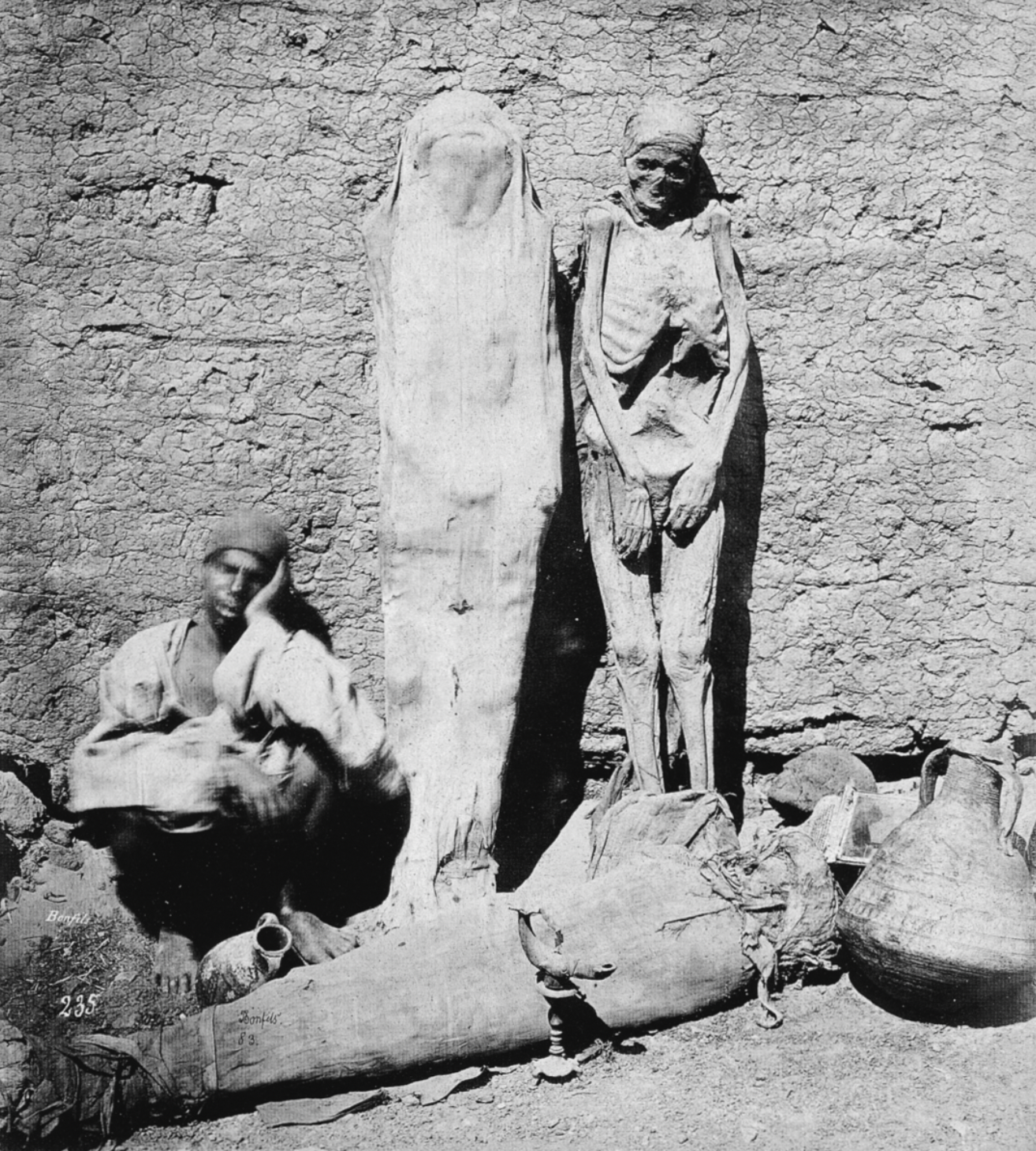
For nearly 2,000 years, mankind have been fascinated with the mummies of ancient Egypt. However, the history of their treatment reveals an intriguing and frequently frightening story.
Because they burned so brightly, Europeans used mummies for a number of purposes during the Middle Ages, including curing ailments like coughs and broken bones, converting them into torches, and crushing them into powder for purported medicinal treatments. This practice was motivated by the false belief that healing bitumen was used to embalm mummies. Mummies had lost much of their medicinal efficacy by the nineteenth century, but people were still fascinated by them.
The demand for mummies was stoked by grave robbers, and dealers brought them from Egypt to Europe and America, where the wealthy treasured them. They were employed in research or displayed as status symbols. The “unwrapping party,” which blurred the boundaries between science and entertainment by ceremoniously unwrapping mummies in front of curious onlookers, was one of the most bizarre fads of the 1800s.
This image of a dealer lounging among a collection of mummies is a perfect example of how these antiquated artifacts turned into commodities that were utilized for everything from drawing room spectacles to medical experiments. It acts as a reminder of how cultural treasures were handled in the past and the importance of preserving them today.
1953’s The Iron Lungs

Before vaccinations, polio was one of the most dreaded diseases in the world, killing or disabling thousands of people annually. With almost 58,000 cases reported, nearly 21,000 people were crippled, and 3,145 people died—mostly children—the 1952 outbreak was the deadliest in the United States. Instead of directly harming the lungs, polio attacked motor neurons in the spinal cord, preventing the brain from communicating with the breathing muscles.
A mechanical respirator that forced air into their paralyzed lungs, known as an iron lung, was frequently used to confine the sickest patients. These tall, cylindrical machines were arranged in rows upon rows in hospitals, each one occupied by children fighting for their lives. The destruction inflicted by polio may be captured in a single picture of these “mechanical lungs,” which serve as a horrifying reminder of the fear and uncertainty that engulfed families before to the vaccine’s launch in 1955.
The lives of those who survived the iron lung were irrevocably changed, and many of them suffered from chronic disabilities. But the picture above, which shows rows of iron lungs extending forever, shows the disease’s human cost as well as the perseverance of those who attempted to eradicate it.
A young lady with her dead child (1901)
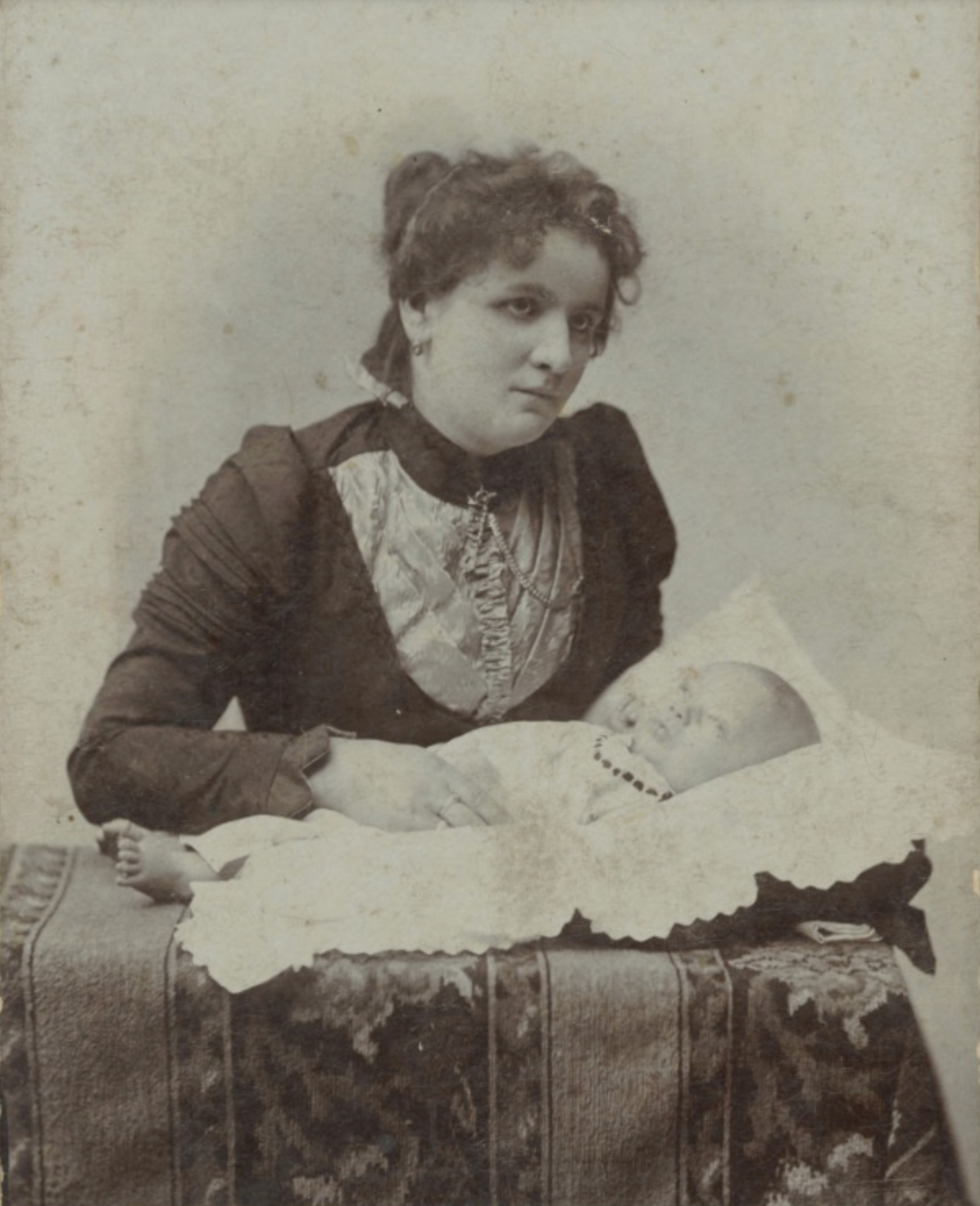
In addition to evoking the Victorian practice of post-mortem photography, the melancholy portrait of Otylia Januszewska holding her recently deceased son, Aleksander, captures a moving moment of sorrow. When the reality of death became too much to handle, this method—which became popular in the middle of the 1800s—was employed to honor the deceased and preserve a last, physical connection to loved ones.
The idea of memento mori, or “remember you must die,” has long been associated with contemplating death. Older cultures created skeleton-shaped ornaments and artworks often featured reminders of mortality during the Middle Ages, offering a somber yet necessary recognition of life’s frailty.
Photography was the perfect tool for intimately reflecting on and personalizing these experiences when it first emerged in the eighteenth century. Now that they could take photographs, families would want to hold on to their deceased loved ones by preserving their faces indelibly. In addition to allowing the living to grieve, it contributed to the creation of a lasting bond and a sense of interconnectedness that endures beyond death.
It’s interesting to note that, when a loved one passes away, we typically celebrate their existence rather than the tragic reality of their passing—as if open discussion of it is prohibited. Victorians, on the other hand, embraced death completely and included it in ceremonies that recognized its inevitable presence.
A key component of it was post-mortem photography, which reached its zenith in the 1860s and 1970s. It started in the 1840s when photography was invented, and although not all Victorians felt comfortable taking pictures of the dead, the practice quickly spread, especially in the US, UK, and Europe.
In 1911, a nine-year-old Maine industrial worker
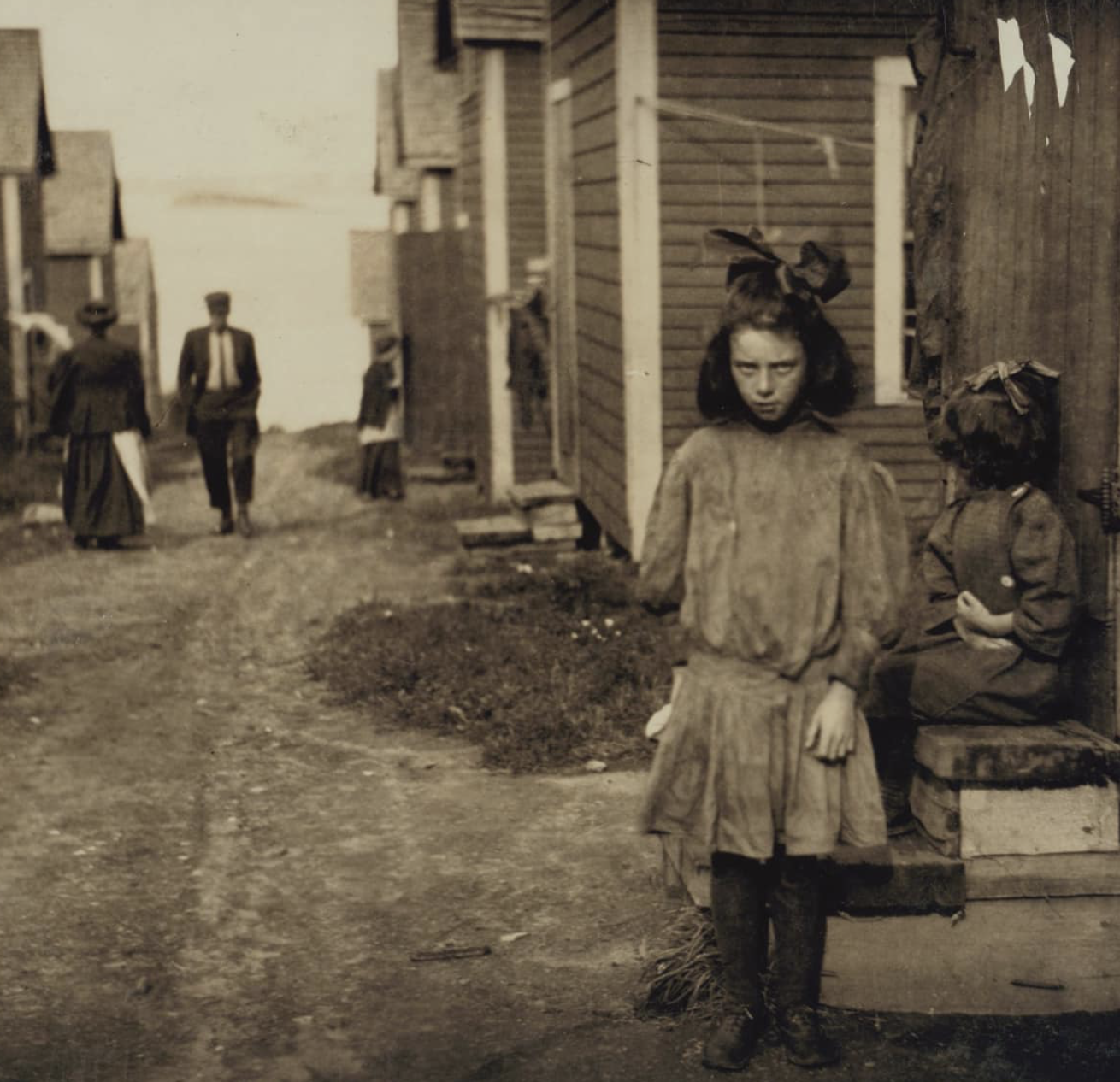
In 1911, hard work, long hours, and finding whatever means to make ends meet were the norm for many American working-class families.
Nine-year-old Perry, Maine native Nan de Gallant worked summers at the Seacoast Canning Co. in Eastport, Maine. She was working long hours with her mother and two sisters, helping her family transport sardines, rather than playing with friends or skipping across fields.
Tragically, child labor was pervasive in early 20th-century America, especially in sectors like agriculture, textiles, and canning. Families benefited from each extra pair of hands. For kids like Nan, though, it meant forfeiting their youth. She started working at the age of nine, which was very typical for children her age at the period. In 1910, 18% of children between the ages of 10 and 15 were employed, according to the US Bureau of Labor Statistics.
Although there was a law in Maine that forbade children under the age of 12 from working in manufacturing, canning businesses, which make perishable goods, were exempt. Although the law was altered in 1911, it’s unclear how much of an impact it had on Nan and other kids.
Acid is dumped into the pool by James Brock (1964).

In order to deter Black swimmers from utilizing the Monson Motor Lodge pool, motel manager James Brock was shown in a horrific photo in 1964 throwing muriatic acid into it.
After a group of Black activists tried to integrate the segregated area in St. Augustine, Florida, this murder was committed. Brock destroyed the pool rather than enabling equality.
The image, taken by Charles Moore, embodies both the bravery of those battling for civil rights and the pervasive intolerance of the day. It serves as a reminder of both our progress and our continued progress in the struggle for equality. It teaches us the value of confronting difficult truths about our past, the strength of resistance, and resilience.
Around 1900, coal miners return from the depths.
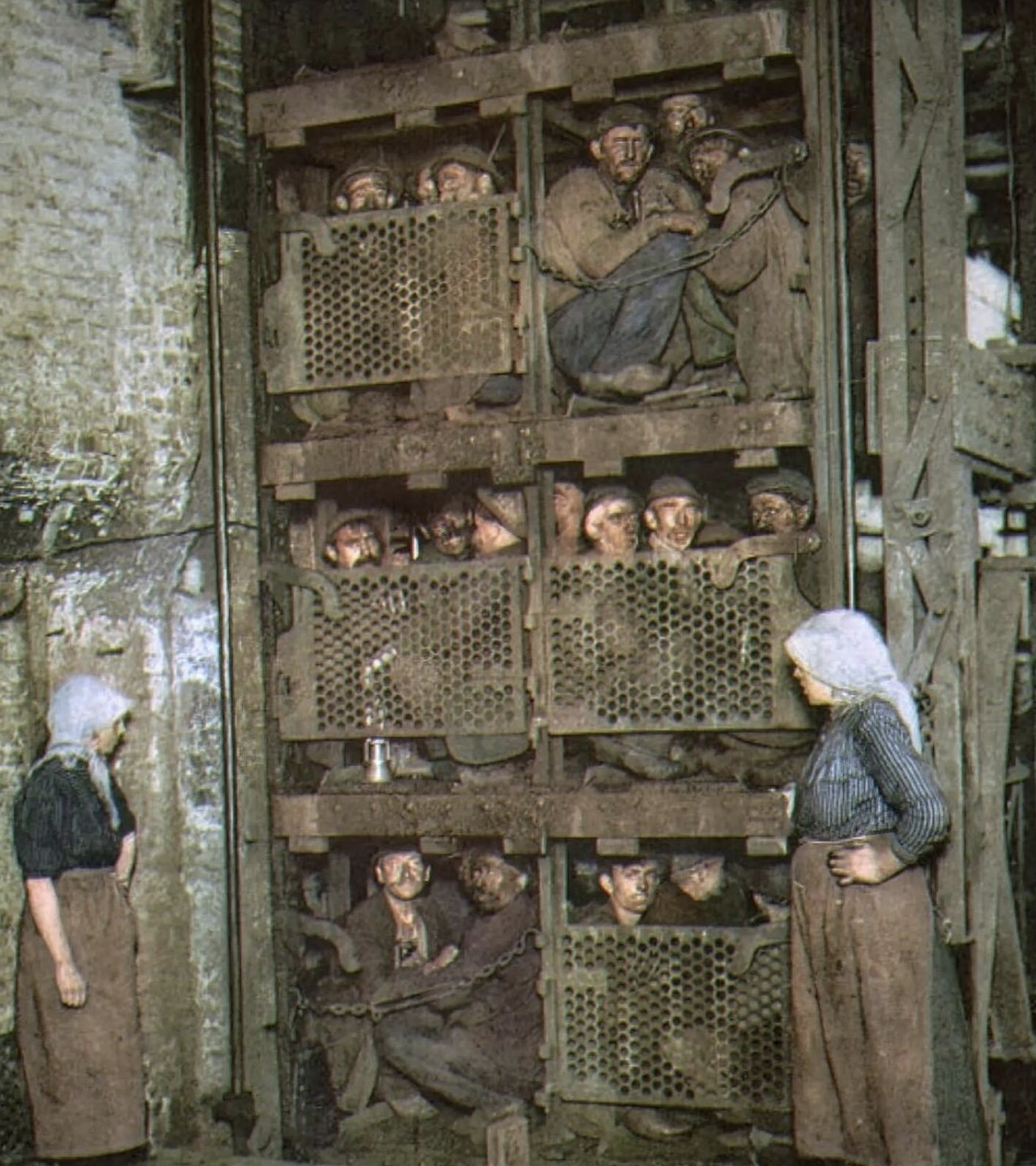
Belgian coal miners labored underground in hazardous conditions in the early 1920s to supply the growing industrial revolution. They would squeak together in a packed elevator after hours of grueling work in the dark, finally making it to daylight. Their gentle remarks and the elevator’s groaning demonstrated how much they relied on one another to get through it.
Their coal dust-covered cheeks spoke tales of sacrifice and hard work. Every crease and wrinkle showed the toll that their jobs had taken on them, but it also showed how much they enjoyed what they did. Despite the risks to their health and safety, these men drove the industries that kept everything running.
It served as a stark reminder of the contrast between the light above and the darkness of the underground when they finally came out into the daylight. More significantly, it was a reminder of their resilience and fortitude. They continued because they had each other. The foundation of their community was their friendship, which was forged from common struggles; they overcame challenges together, no matter what.
The fingertips of Alvin Karpis (1936)

Alvin “Creepy” Karpis was a notorious criminal from the 1930s who participated in high-profile kidnappings as a member of the Barker gang. He tried to hide his identity after his fingerprints were found on two significant crimes in 1933.
In 1934, Chicago underworld physician Joseph “Doc” Moran performed cosmetic surgery on him and fellow gang member Fred Barker. Before erasing their fingerprints, Moran numbing their fingers with cocaine and modified their jaws, chins, and noses.
Karpis was captured in New Orleans in 1936, sentenced to life in prison, and spent more than 30 years in prison, including time at Alcatraz, in spite of these efforts. In 1969, he was given parole.
1930s Halloween Costumes
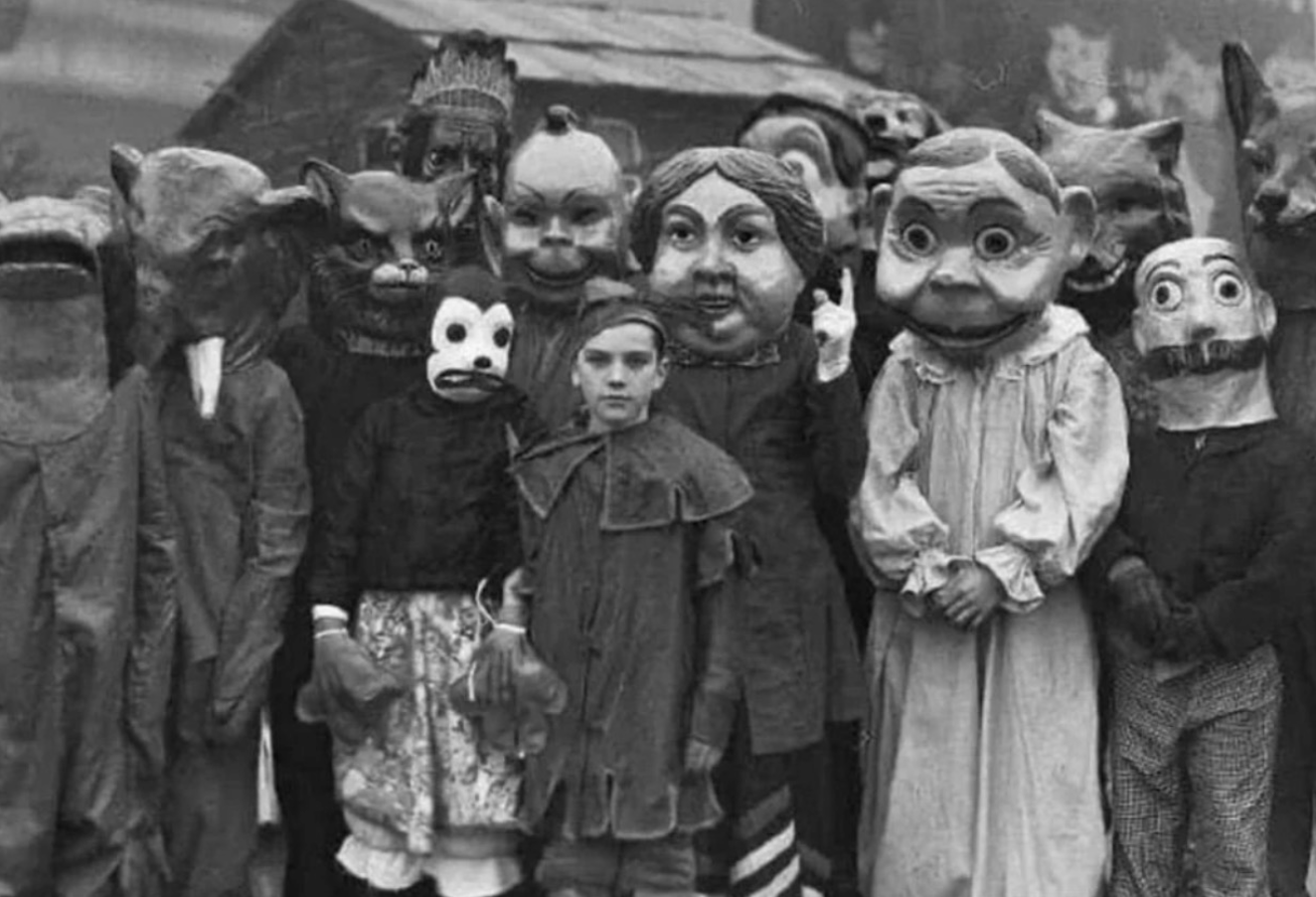
As violence and vandalism increased during the Great Depression, towns started to create customs like candy distribution, costume parties, and haunted houses to discourage disruptive behavior. Additionally, a wider variety of kid-friendly costumes became available during this time, which increased the fun of the festivities. Two men creating a death mask (c. 1908)

The use of death masks to preserve the deceased’s look has been around for a while. For instance, the Egyptians constructed elaborate masks to help the dead get to the afterlife. The foundation for later death masks was laid by the sculptures and busts of their ancestors made by the ancient Greeks and Romans.
The focus on realism was what set death masks apart from other depictions. These masks were intended to create a permanent tribute by capturing the subject’s true features, as opposed to idealized sculptures. Death masks made for famous people like Napoleon, Lincoln, and Washington were later used to make busts and monuments honoring them long after they passed away.