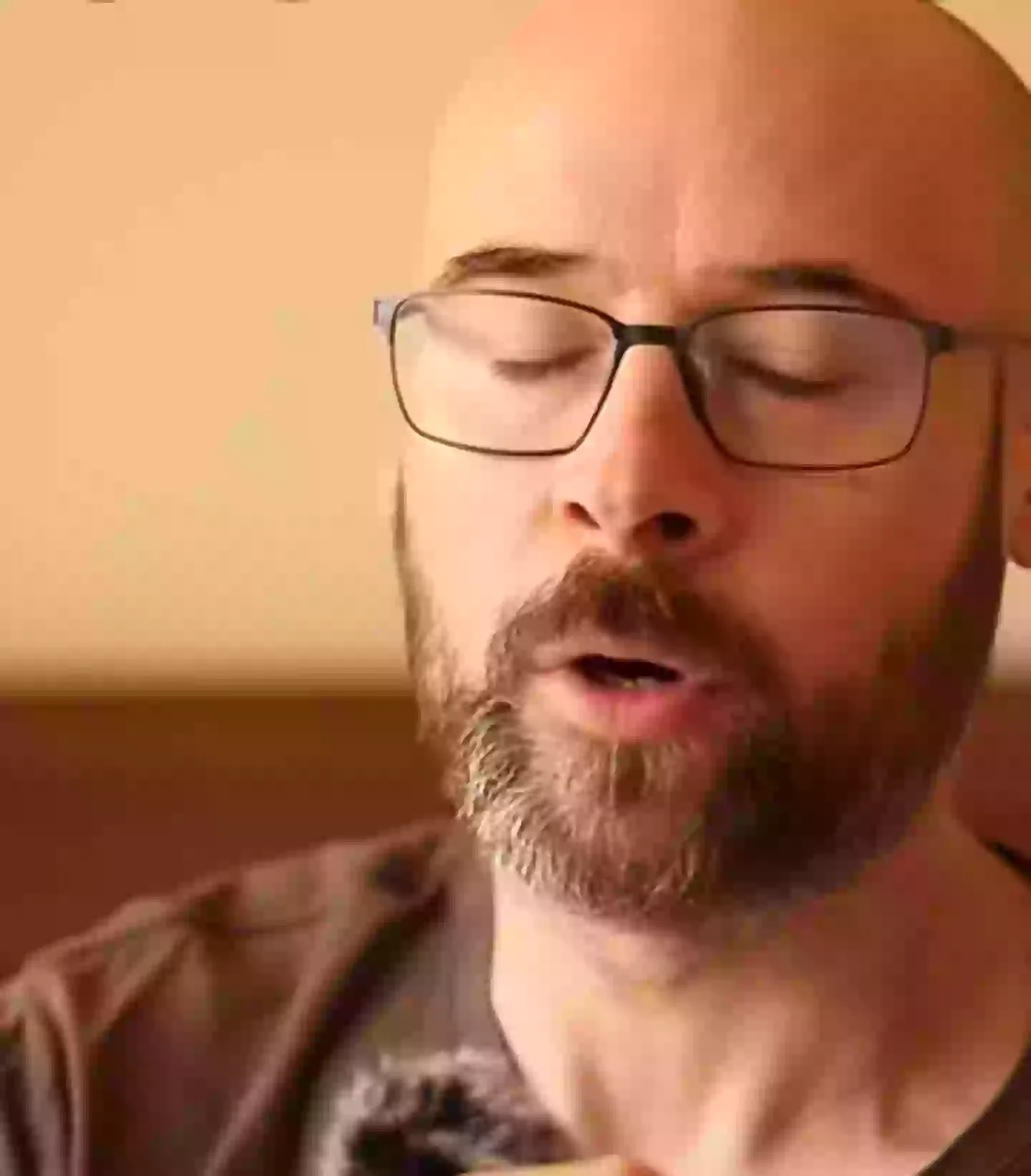
An Australian man is asking others to pay attention to the warning signs of young onset Alzheimer’s after he ignored the slight indications of memory loss he had in his 30s.
The majority of us think of Alzheimer’s as something distant, affecting our grandparents rather than someone who is in their prime. In mid-2024, however, Fraser, a 41-year-old Australian parent, received a formal diagnosis of young-onset Alzheimer’s, shattering that myth.
People under 65 are susceptible to the condition, which is often referred to as early-onset Alzheimer’s. According to the Alzheimer’s Association, “an accurate diagnosis of early-onset Alzheimer’s” is a “long and frustrating process” since “health care providers generally don’t look for Alzheimer’s disease in younger people” because it is less frequent. The association also notes that Alzheimer’s is “not a normal part of aging.”
The Mayo Clinic believes that approximately 110 persons between the ages of 30 and 64 have young-onset Alzheimer’s disease, despite the fact that it is rare.
“Very serious memory problems”
Fraser is one of the very unfortunate few people who have young-onset Alzheimer’s disease, and his symptoms didn’t start off that way; rather, they gradually developed over the course of two years before he was diagnosed.
It’s funny because I can’t recall the exact nature of my initial symptoms. In one of the first videos he posted on his channel, the Australian father stated, “I (don’t) have dementia. All I remember was having some pretty big memory flaws.”
Fraser utilizes the channel to talk candidly about the mental and emotional struggle that resulted in his diagnosis as well as the minor red flags he disregarded along the road.
“My boyfriend said, ‘Yeah, we watched that like a month ago,’ while I was settling in to watch a movie. Even though I saw the entire film, the conclusion still caught me off guard. I have absolutely no recollection of seeing it. The teacher and researcher stated, “It was a little concerning because I didn’t watch many movies at the time either.”
However, he didn’t give the movie night much thought until he began experiencing more significant memory loss.
What happened to my daughter?
His terrifying evening spent driving around in search of his teenage daughter, whom he believed was gone, marked a turning point in his life.
She had made plans with her father earlier in the day to go to the movies, but he had forgotten.
“I recall my daughter telling me multiple times during the day that she would be going to the movies that evening and that it would be kind of late with a friend,” he recalled.
When nightfall arrived, I began to panic, wondering where my kid was. In an attempt to find out if other friends had heard from her, I was heading to the adjacent town.And I became so worried that I was on the verge of calling the cops.
He had “been trying to call her, trying to phone message, trying to message her, and just not getting through to her at all,” the terrified parent revealed.
And after that, she calls me and says, “Hey dad, I was just in a movie.” Do you recall what I told you?
“Shallow thinking”
He explains that his two kids were the ones who gave him the confidence to identify his “earliest symptoms,” which he had first thought were “casual.”
According to my children, who I asked in a quite casual manner, “everyone has memory problems and forgets things in daily life. We just noticed that you were doing them more frequently, more frequently just normal, everyday memory lapses that everyone has.”
After deciding to consult a physician, Fraser received a younger-onset Alzheimer’s diagnosis in May 2024.
It wasn’t until perhaps a few months before to the diagnosis that I realized I was struggling to think clearly and effectively. Regarding his cognitive impairment, he stated, “I discovered that I had more surface level thinking, more shallow thinking.”
Mental health “crashed”
Fraser told his 14.3 thousand followers in a more recent video that he “kind of wanted to put it all out of [his] head” and “not think about it, like six months later, five months” when he was initially diagnosed.
But his mental health collapsed as a result of living in denial.
Fraser described how he suddenly began experiencing panic attacks and came to the realization that he was trying to “bury [his] head in the sand” by ignoring the reality.
He added that a psychologist assisted him in “unpacking,” saying, “But really it’s always in the back of your mind and so I just wasn’t dealing with it.”
“The brain is tired.”
Fraser claimed that as the illness worsens, he has “forgotten” how to perform basic tasks that he has done “a thousand times,” such as shutting off the shower or operating his partner’s vehicle.
“You just can’t really focus on things very well and you’re in a haze because a fog just comes over your brain,” he said.
“My brain has had enough,” Fraser continues.
Fraser just wants to be honest; he isn’t trying to be a hero. This genuineness is encouraging others to pay attention to the warning symptoms, even if they appear minor, and assisting in the dismantling of the stigma associated with early-onset dementia.